Context Windows vs Pre-Modeled Datasets for Agent Accuracy
Structured data beats raw context for agent accuracy and safety.

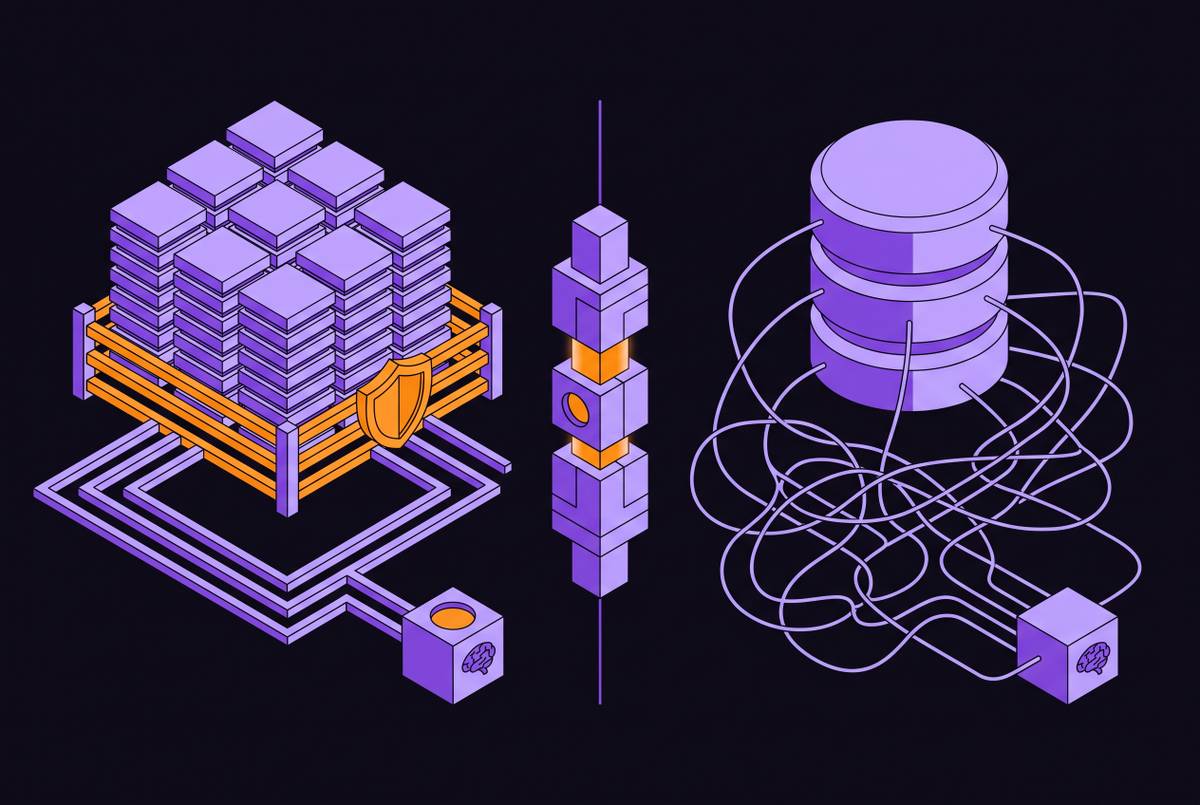
The dominant architectural reflex of 2026, stuffing more raw data into a larger context window, does not make data agents more accurate. Expanding the window amplifies the failure rather than resolving it, because more room simply admits more noise. Pre-modeled, governed datasets address this at its source, delivering inputs an agent can reason over directly instead of raw material it must first interpret.
The instinct is understandable. An agent gets confused, returns a wrong answer, and the builder's response is to give it more context: more schema, more documentation, more history. But benchmarks show models get unreliable well before their stated limits, and the same degradation pattern scales upward as windows grow. The NoLiMa benchmark finding makes this precise: most tested long-context models fell below half their short-context baseline by 32,000 tokens. The window is not the constraint. What enters it is.
What actually fills an agent's context window when it queries data
When a data agent runs a multi-step query, the majority of its context window is consumed by discovery work, not by the answer. Four competing content types crowd every window on every step. And the full accumulated conversation history sits underneath all of it, re-read at every step.
Consider what an agent answering "what was NRR for mid-market accounts last quarter?" actually does. Discovery compounds: each wrong guess adds recovery steps, and each recovery step carries the full accumulated history. Errors early in a run make later steps progressively more expensive and less accurate.
The context window behaves like RAM, not persistent storage. Mem0's architecture analysis draws the distinction precisely: it is volatile, degrades before it is full, re-reads its entire contents on every inference call, and is append-only by default. Not stable business definitions, historical query patterns, or cross-session facts. Yet in a typical data agent run, the window fills with exactly those durable things, carried as if they were ephemeral working state.
Five ways context degrades before an agent reaches its answer
Context degradation is not one problem but five overlapping failure modes, each with a different cause and a different signature in agent output. Context poisoning occurs when incorrect or hallucinated information enters the window early and gets treated as ground truth in every subsequent step. Redis's context failure research finds that in multi-hop retrieval settings, models often fail to reject irrelevant content once it is already present. The poisoned token stays, and every later step reasons from it.
Context distraction is subtler: accumulated history and verbose tool outputs overwhelm fresh reasoning. Length alone degrades performance even when every retrieved token is technically relevant. The signal is there, but the agent cannot find it. Context clash happens when contradictory information from two sources lands in the same window. The model either picks arbitrarily or hallucinates a synthesis of both.
Context rot is the cumulative effect of all four: recall degrades across an agent's lifespan even when the token count stays within technical limits, because the signal-to-noise ratio collapses. Noise from off-topic but credible-looking content is more damaging than obviously irrelevant material, since it competes with real signal on the same attention weights. Benchmarks show step accuracy collapsing under injected irrelevant passages even for strong models.
Why runtime context management techniques can't solve the underlying problem
Runtime window management techniques are real and necessary, but they operate on what is already in the window. They cannot answer whether that content is correct in the first place. Tool-output trimming reduces token cost after a result is consumed, but trimming too early loses a field a later step needs. Tool-list narrowing filters available tools per step and saves tokens, but it requires knowing in advance which tools a step needs. External memory references reduce window load but add a retrieval hop, reintroducing latency and relevance risk.
Positional attention decay compounds the problem for multi-turn agents. This is an architecture problem, not a model problem. But "minimal quality loss" assumes the retained content was correct to begin with.
The gap runtime management cannot close is semantic. It cannot tell an agent that two tables define "revenue" differently, that a field name means something different in the finance team's usage than in the product schema, or that a query is pulling from a stale snapshot. Dreambase's approach of pre-calculating metrics and exposing them as validated Parquet datasets removes the need for agents to discover or hallucinate business logic at runtime.
What pre-modeled, governed datasets give an agent that raw context cannot
Pre-modeled, governed datasets solve the context quality problem at the source. Instead of asking the agent to discover what the data means, a governed layer delivers data that is already resolved, validated, and semantically grounded before a single token enters the window. Pre-modeling means metrics are calculated ahead of time with a single, versioned definition. Datasets are pre-validated against business logic, so an agent receives a number it can reason over rather than raw rows it must interpret. Schema is replaced by semantic context: field names carry meaning, not just labels.
The accuracy lift is concrete and dramatic. Discovery work is the single largest source of context bloat and accuracy loss in a typical data agent run. Token efficiency is a byproduct of data quality, not a separate optimization. The window never fills with that exploration in the first place.
Why agents must never touch production databases directly
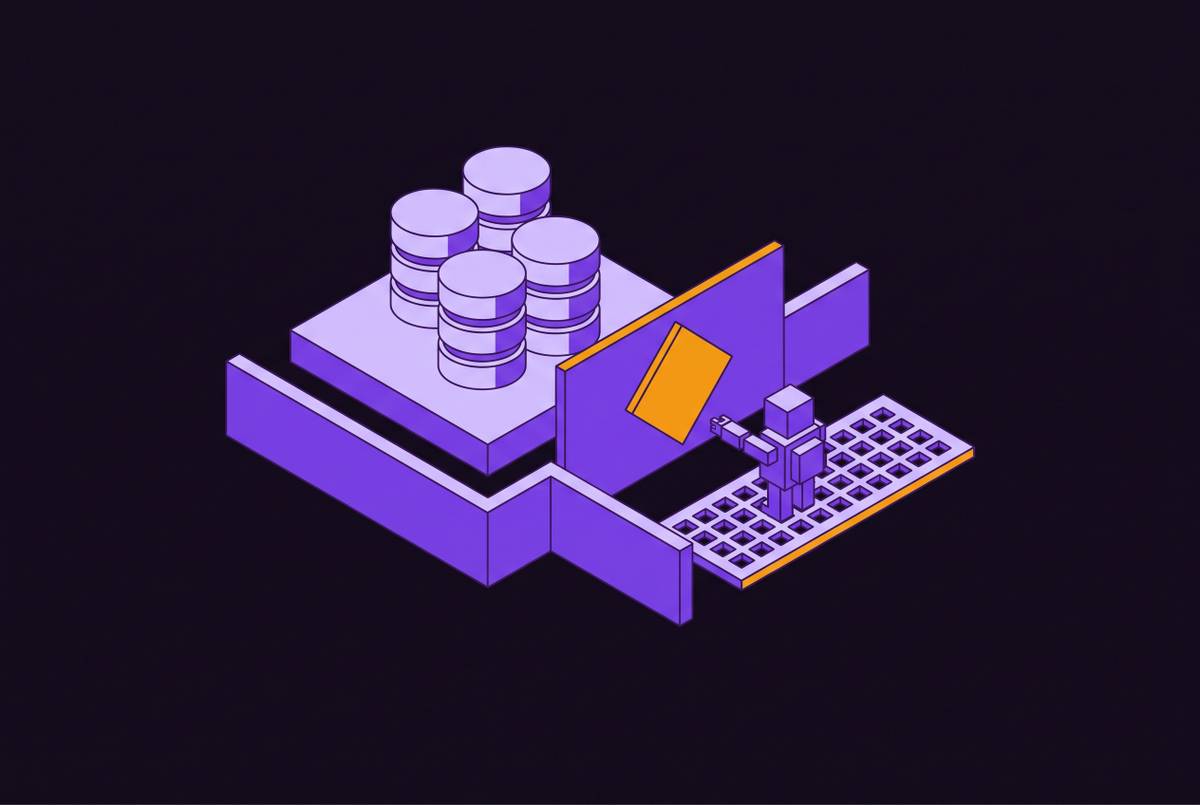
Giving an agent direct access to a production database compounds every context failure mode with a new category of risk. Agents that misread schema, hallucinate column names, or receive corrupted context can issue destructive SQL, not just wrong answers. The same accuracy failure mode that causes a wrong answer in a dashboard causes a destructive action in a write-capable context: an agent that guessed the wrong revenue table will guess the wrong target table for a DELETE.
The industry is responding to this forcing function at the enterprise level. Oracle introduced Deep Data Security in its AI Database 26ai, announced March 2026 and generally available April 2026, specifically to address the risk that agents can be manipulated or mistaken into executing SQL that exposes sensitive data or modifies protected records. The concern is security, privacy, and compliance exposure, not just answer quality.
Three safe-access principles emerge from the research. Versioned, isolated environments: agents test transformations in isolation before anything is promoted, so a logic error cannot corrupt shared datasets and break every downstream consumer. These principles point toward a single architectural answer: a governed data layer that sits between agents and production.
The architecture that connects pre-modeled data to any agent: MCP as interface, not solution
MCP, the Model Context Protocol launched by Anthropic in November 2024, gives agents a standardized way to call tools and access resources. It is an interface layer, not a data platform. An agent with MCP access to a raw database still faces every context quality and safety problem described above.
The protocol has evolved rapidly. A July 28, 2026 revision described by Anthropic technical staff member David Soria Parra as the most substantial change to the protocol since the addition of authorization made MCP stateless at the protocol layer, removing transport-level session management and enabling the protocol to scale on ordinary HTTP load-balanced infrastructure. Yet adoption has outpaced the security model. A May 2026 report from the U.S. National Security Agency noted this explicitly, and MCP's own security guidance describes "confused deputy" risks in MCP proxy servers.
What MCP requires underneath it to be safe and accurate for data agents is substantial. Auditability and lineage: every agent query needs to be logged and traceable, which MCP does not provide. Query performance and cost controls: analytical queries at scale need a query engine optimized for read workloads, not a production transactional database.
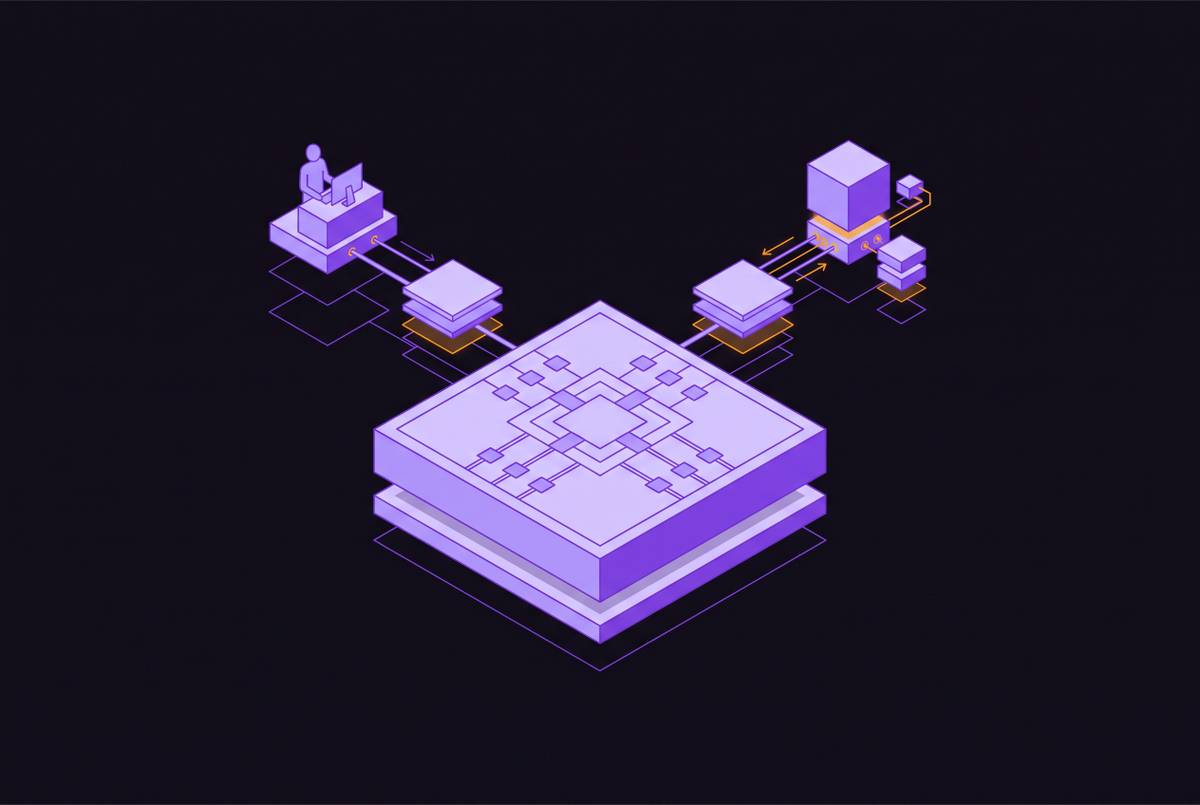
The right architecture puts a single MCP server in front of pre-modeled, governed datasets. MCP solves the interface problem. The governed data layer solves the data quality and safety problem. Both are required.
How Supabase teams end up with agent accuracy problems their schema cannot fix
Supabase's rapid growth has made these problems concrete for a specific and expanding audience. The platform crossed ten million developers by July 2026, and co-founder and CEO Paul Copplestone has stated that a substantial share of databases are now launched by agents. More agents are running against Postgres than ever before, which means the accuracy and safety problems described above are not hypothetical for this community.
The difficulty is not that agents lack knowledge of Supabase. Common agent errors on Supabase include skipping RLS policies on exposed schemas, hallucinating CLI commands, and creating views without security_invoker = true, which silently bypasses RLS. Agents also rely on training data that may be months out of date.
Supabase's own response, Agent Skills, offers a collection of rules across eight categories including query performance, connection management, Row Level Security, schema design, and concurrency. These rules address agent judgment, but best-practice rules do not resolve the upstream problem of what data the agent receives. A well-behaved agent reasoning over ambiguous raw schema still produces business-wrong answers.
Postgres is the right analytical home for Supabase teams. The Supabase production architecture for agent workloads points in the same direction: Postgres with pgvector at the center, Supavisor or PgBouncer for connection pooling, agent logic in Edge Functions, slow work pushed onto Queues. Analytical queries belong on a read-optimized layer, not on the production request path.
One metric definition, shared across every agent and every teammate
The most common source of agent accuracy failure in business intelligence is not a context window problem at all. An agent can return technically correct SQL results and still produce a business-wrong answer. When a semantic layer precedes agent access, the agent cannot guess the wrong definition. It receives a pre-calculated, versioned metric that matches what the finance team sees, what the board deck shows, and what the automated report generates. Context rot when accumulated exploration of ambiguous fields degrades recall of the canonical answer.
This principle has a named instance in the Supabase ecosystem. For startups without a data team, the right architecture is to define one source of truth for business metrics, pre-calculate those metrics in a governed layer, and expose them to both human dashboards and agent queries through the same interface. The number a founder sees in their inbox is the same number an agent cites in a generated report.
How Dreambase implements a governed data layer for Supabase teams and their agents
Dreambase is built specifically for Supabase and Postgres teams that need their agents and their human teammates to reason from the same trustworthy, pre-calculated numbers, without a data warehouse, ETL pipeline, or dedicated data team. The architecture addresses every failure mode named in this piece. Agents query governed Parquet datasets through a single MCP server, never touching the production Postgres instance. Dreambase extends an existing Supabase project into full analytics capability, treating Postgres as the analytical home rather than a source to extract from.
The interface is standardized. Dreambase exposes governed datasets through a single MCP server, so any AI agent or human workflow connects to the governed data layer through the stateless, scalable protocol described earlier. Agents and humans pull from the same pre-calculated source.
What to evaluate before choosing how your agents access data
The choice between raw context access and a pre-modeled governed layer is an architectural decision with measurable consequences for accuracy, safety, cost, and metric consistency. It should be evaluated against explicit criteria, not defaulted to whichever approach is easiest to wire up first. Does the agent receive pre-calculated, semantically grounded metrics, or does it discover and interpret raw schema at query time? If not, the Replit failure mode is a matter of when, not whether. Is there a single, versioned definition for every business metric shared across human and agent consumers? If revenue means different things to the finance dashboard and the analytics agent, the governed layer has not been implemented. Does the interface layer connect to governance, semantics, auditability, and query performance underneath, or just to raw table access? MCP alone is an interface, not a data platform.
Runtime window management decides which tokens stay, not whether those tokens are correct. Teams that can answer yes to all five criteria have solved this upstream problem. Context window management then becomes straightforward, because the context the agent receives is already correct, compact, and semantically grounded.