Governance Primitives That Make a Supabase-Backed Analytics Layer Safe for Agent and Human Consumers Alike
Four controls let humans and agents share one Supabase analytics layer safely.

A headless analytics platform for API-first and agent-first teams needs governance at the data interface. For a Supabase-backed analytics layer, the foundation is a read-only analytical copy, scoped identities, pre-action authorization, and immutable audit records. These primitives let human tools and agents use the same data under one trust contract without an opinionated frontend.
Why agents querying the same analytics layer as humans creates a new category of governance problem
MCP gives human BI tooling and autonomous agents a shared interface to find, access, and query data. Instead of maintaining N×M point-to-point connectors, teams can expose an interface that connected tools and agents speak. That efficiency also concentrates exposure at the shared layer. An ungoverned table, undefined metric, or missing permission boundary is available to the connected fleet.
The shared layer creates a structural governance risk. An agent querying production Postgres can exhaust connections or bypass row-level security before any question of model misbehavior arises. Human users then experience the consequences because their applications and reports depend on the same infrastructure. The State of AI Agent Security 2026 found that most organizations cannot trace or stop what their agents do, placing this problem in live operations. Separate controls for human and agent interfaces leave the shared data boundary unresolved.
What agents actually do to an ungoverned Supabase analytics layer
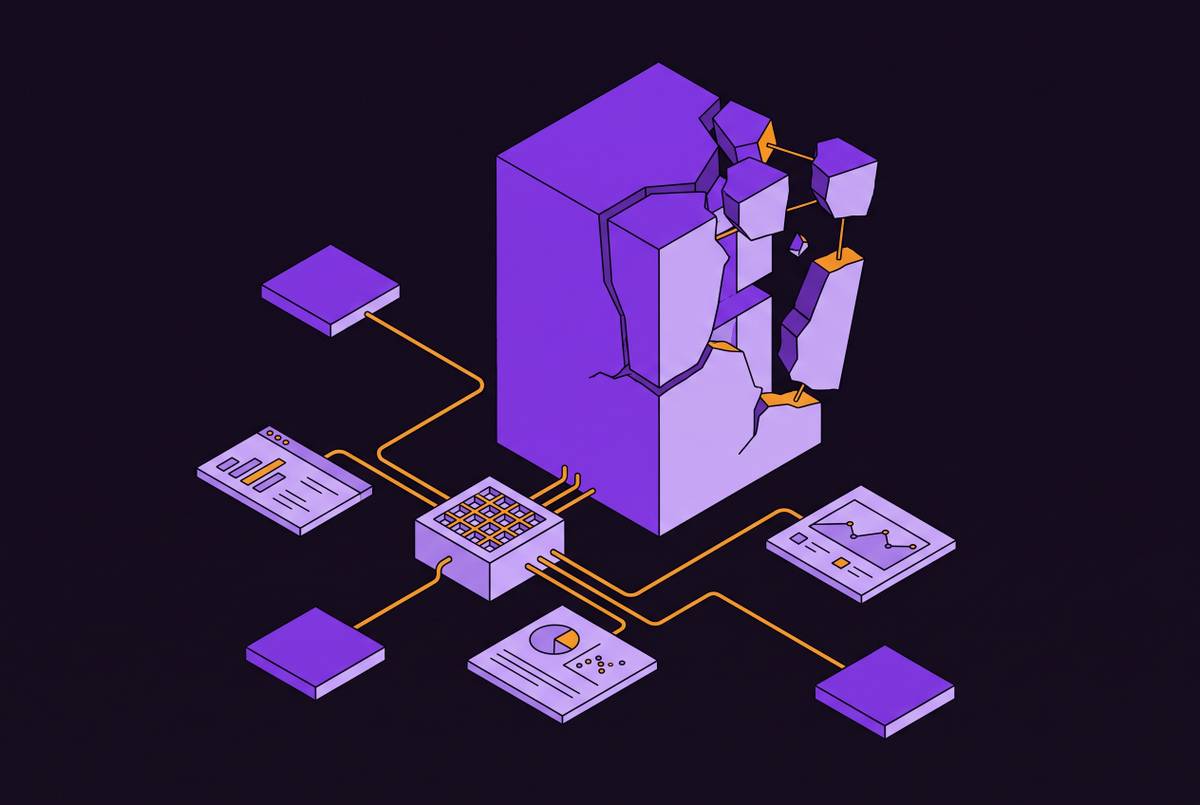
Metric drift begins when each consumer defines its own calculation. An agent working from raw tables might use SUM(revenue) where a human report uses SUM(amount_captured). Both answers can follow their own rules and still use different definitions of revenue. The disagreement is not necessarily a faulty query. Without a shared definition or a mechanism to detect the discrepancy, a successful query can produce an answer that diverges from every human-generated report.
Connection-pool exhaustion is a different failure with a shared consequence. Without a pooling boundary, serverless functions and agent calls that hit Postgres open new connections, and an agent fleet can exhaust the connection limit in milliseconds. Queries slow down, and human users on the same project can get HTTP 504s. Ordinary analytical demand becomes disruptive because it competes for the connections serving other workloads.
Permission-boundary failures can be quieter than either of these. RLS is disabled by default on new Postgres tables, leaving every row accessible to roles with the appropriate table privileges until it is explicitly enabled. A broadly scoped agent credential can therefore read data outside its intended remit without an obvious failure signal. A service_role key also brings the risk of RLS bypass. In this case, successful execution conceals the authorization failure.
These failures also differ in what a returned answer reveals. A metric discrepancy may appear in a comparison with another report, while connection pressure appears through degraded service. A user whose data is read without permission may see no sign of it. None of those symptoms establishes whose authority the agent used. Without that attribution, teams cannot reliably distinguish a wrong calculation, excessive demand, and access that should never have occurred.
Read-only pre-modeled datasets as the first governance primitive
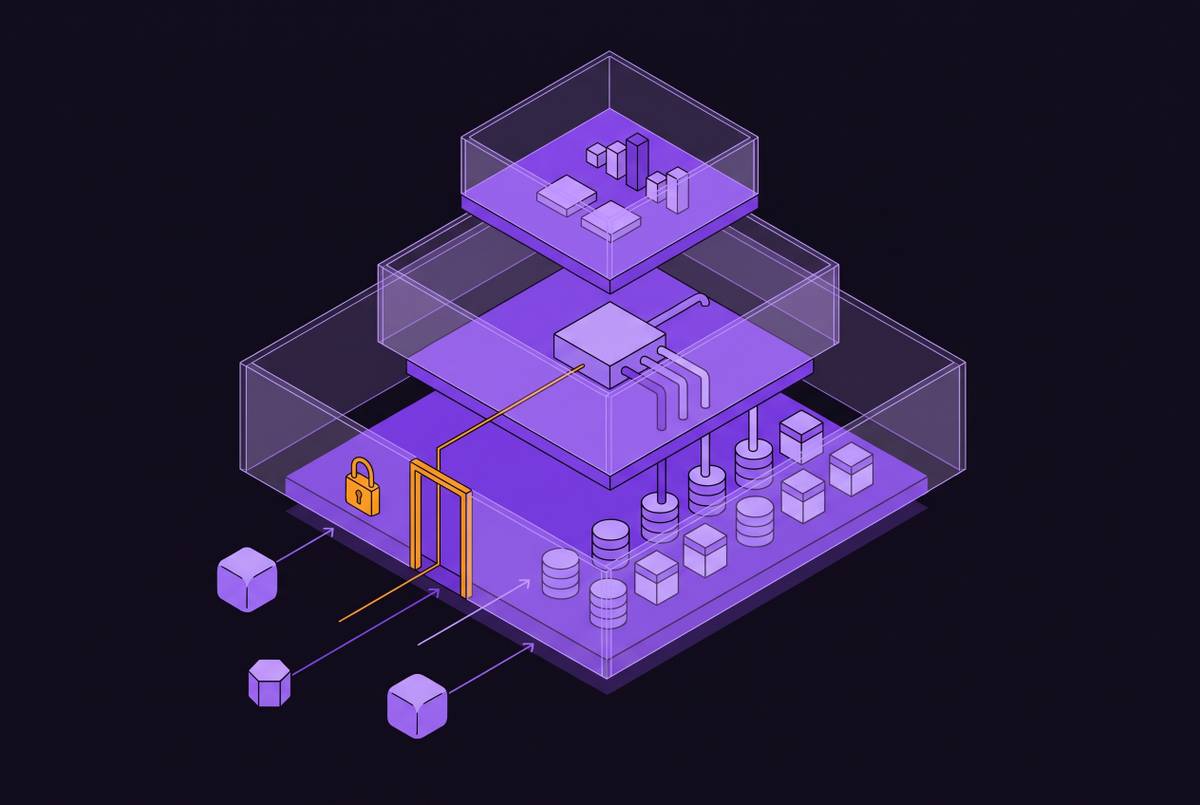
A governed analytical copy removes agent queries from the transactional path. It places pre-calculated, read-only datasets between consumers and the production Postgres instance, rather than letting each analytical request reach raw production tables. The separation is both semantic and operational. Consumers get metric definitions already in place through infrastructure that does not rely on production query connections. This creates a defined surface on which the remaining governance controls can operate.
Pre-modeled means that metrics are calculated ahead of time and stored in a form both humans and agents can consume. Governed Parquet files queryable through DuckDB are one such pattern. When the dataset defines revenue, an agent no longer needs to choose between competing raw-table calculations to answer that question. A human report that uses the same dataset uses that definition too.
Read-only access bounds what an erroneous request can change. An agent restricted to the analytical copy cannot mutate source records, corrupt a metric definition mid-calculation, or trigger write-side RLS bugs against production. Its query also avoids opening a connection to the production Postgres instance. Agent demand therefore cannot use up the production pool through that serving path.
That separation does not require a prebuilt dashboard UI. The governed dataset can sit behind the shared MCP interface, leaving human tooling and agents to consume the same analytical definitions through their respective interfaces. The important distinction is between exposing a governed analytical surface and exposing unrestricted production tables. A headless interface removes frontend assumptions while retaining the need for a controlled data boundary.
Scoped identities: why every agent needs its own credential, distinct from human and service-role accounts
The analytical copy’s protection depends on the credential requesting it. If an agent also holds a broadly privileged production credential, the intended read-only path is not an effective limit on its authority. Supabase’s service_role bypass makes this distinction particularly concrete. Restricting a dataset does not compensate for giving its consumer a key that can bypass RLS elsewhere. A borrowed human OAuth token similarly blurs the boundary between the agent’s task and the human’s permissions.
The security report found that only 17% of organizations give every agent its own identity. The others share accounts, borrow human credentials, or use static keys, so dataset controls have no separate identity for each agent. Attribution becomes ambiguous before a query even executes. A record that names a shared account cannot on its own show which agent’s access should be looked into or revoked.
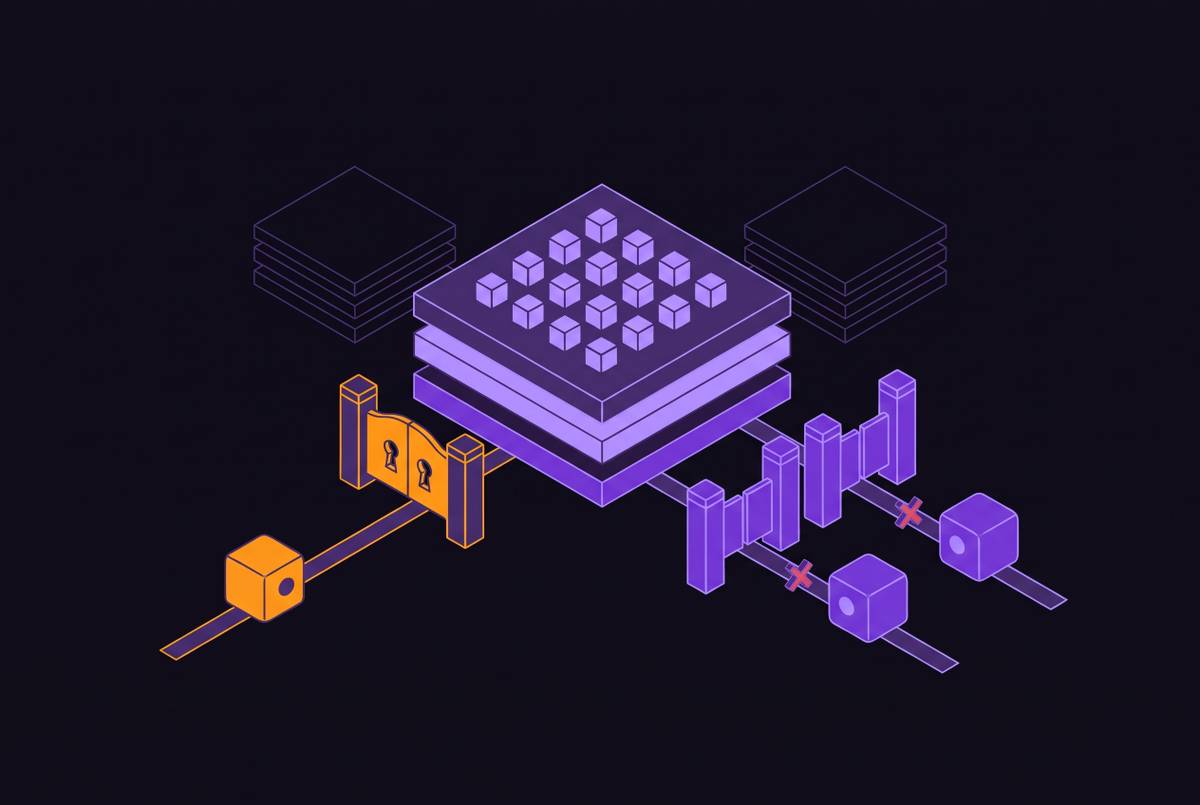
The Coalition for Secure AI’s Agentic IAM specification (2026) uses SHOULD to recommend that each runtime agent instance have its own identity based on an agent card. The target state is Zero Standing Privilege, with short-lived, task-scoped credentials and baseline permissions distinct from those of the user or system on whose behalf the agent acts. This makes the agent’s authority explicit rather than inherited wholesale. It also separates the right to perform a task from continued possession of a powerful credential.
Distinct identities make selective revocation and useful attribution possible. A compromised or misbehaving agent can be cut off without interrupting human users or unrelated agents. Its audit entries can also be traced to a deployment, session, and task. The security report found that only a small fraction of organizations could revoke a rogue agent’s access to all systems within an hour. Per-agent identity supplies the necessary boundary for that capability, though identity alone does not decide which actions are allowed.
Pre-action authorization boundaries: enforcing what an agent may do before the tool call executes
A known identity establishes who is making a request. Pre-action authorization checks whether that identity is allowed to take the action before it runs. Model alignment changes behavior probabilistically, leaving permission on individual calls unenforced. Post-hoc evaluation arrives after the action has executed. Sandboxed execution also serves a different purpose, limiting the blast radius of execution rather than preventing an unauthorized action from executing in the first place.
Uchi Uchibeke’s 2026 work identifies the lack of authorization before actions execute and presents the Open Agent Passport specification as an enforcement mechanism. OAP intercepts tool calls synchronously, evaluates them against a declarative policy, and produces a cryptographically signed audit record. The decision sits outside the model’s judgment. In the reported adversarial test, social engineering often succeeded under a permissive policy, while a similar group of attackers had a zero percent success rate under a restrictive OAP policy. That result illustrates the effect of deterministic enforcement in the test.
For analytics, the policy can permit a named governed dataset through a Resource or a specific Tool that runs a pre-approved analytical workflow. It can block write operations, production schema introspection, and lateral calls to MCP tools outside the agent’s declared scope. Permission is evaluated against the requested action. A legitimate identity requesting an illegitimate operation must therefore be denied rather than treated as trusted merely because authentication succeeded. The security report found that only roughly half of agents have policy enforced on what they may do, leaving monitoring to detect actions it does not prevent.
Immutable audit records: the governance primitive that makes the other three verifiable
Authorization prevents disallowed execution, but its decisions must also be verifiable. Immutable audit records provide proof that the read-only boundary, identity scope, and action policy were applied. They support regulatory demonstration, investigation, and detection of policy drift over time. Monitoring alone does not establish that proof. A record the agent can rewrite or omit cannot reliably prove that the infrastructure enforced its limits.
Infrastructure must collect records and store them out of band from channels the agent can reach, rather than accepting the agent’s account as authoritative. Uchibeke specifies that OAP produces its signed record at authorization evaluation, before the tool call executes. That record lists the declared identity, the action requested, the policy checked, and the decision. It remains independent of what the agent subsequently claims to have done.
The security report found that only one in eight organizations can fully reconstruct what an agent did thirty days ago and whose authority it used. For shared analytics, that gap obstructs more than incident response. A metric dispute requires records of the consumer, dataset version, query time, and credential. An immutable trail can establish which human or agent queried which version under which authority, making the disagreement traceable. The authorization record and the dataset-access trail serve related but distinct evidentiary purposes.
Audit access is itself a governed surface. The identities allowed to read the log, and the channels through which they do so, need the same identity and authorization controls as analytical data. Otherwise, the audit trail becomes another target for unauthorized access or attempts to modify records. This completes the shared-layer accountability requirement established at the outset. There is no need to rely on human consumers or agents to report whether the contract held.
How the four primitives form a single trust contract, not a checklist
Each primitive depends on protection supplied by the others. A read-only dataset does not establish which credential should be allowed to read it, and a distinct identity does not prevent that identity from requesting a forbidden action. Without immutable records, it is hard to check or improve how pre-action authorization is enforced. Audit records without effective boundaries document activity without making it permissible.
A human analyst using a governed dashboard and an agent calling a Resource through an MCP server encounter the same dataset boundary, identity requirement, action policy, and audit trail. Their interfaces differ, but their entitlement to data follows the shared rules. For Supabase teams seeking raw API access without an opinionated frontend, these are concrete criteria for evaluating the analytics backend.
The practical implication is to establish these boundaries before expanding the agent fleet. The security report found that confidence in agent governance fell sharply between April and October 2026 as agent estates grew. Adding consumers before establishing their permissions and audit trails leaves the shared layer harder to account for. A Supabase-backed headless analytics architecture is ready for human and agent consumption when infrastructure enforces the contract at access time.