How MCP Access Controls Become the Deciding Factor When Choosing a Headless Analytics Backend
MCP access controls determine which backend secures your agent's data access.
For API-first and agent-first teams, the best-fit headless analytics backend is a governed semantic layer that serves consistent metrics through scoped APIs and MCP tools without imposing a frontend. MCP access controls decide the choice because a standard way to connect does not make access safe. Teams adding usage analytics to an agent, including those building on Supabase, need to evaluate what the backend prevents.
Why MCP became the standard connection layer for agent-to-data access
Before MCP, every agent-to-data connection required a bespoke adapter, so integration quality distinguished backends by how quickly teams could connect them. MCP replaced that work with a common wire format, JSON-RPC 2.0, for communication between compliant clients and servers. Clients and servers still need a compatible transport, either stdio or Streamable HTTP. The USB-C analogy captures the change without implying that every possible pairing works automatically.
The 2026-07-28 stateless specification finished making these connections fit to serve as infrastructure. Stateless Streamable HTTP replaced session-based Streamable HTTP and deprecated the legacy HTTP+SSE transport, allowing servers to scale horizontally and clients to run anywhere. This changed the basis of backend selection. A standardized connection no longer gives a team a sufficient reason to choose one data layer over another.
What the end of the integration race means for how backends compete
With connectivity standardized, governance becomes the differentiator at the agent-to-data boundary. The question is no longer simply whether the backend can communicate with them. It is what those agents can see, do, and prove they did. Those distinctions remain even when competing backends speak the same protocol.
A backend can expose a metrics layer through MCP while leaving its definitions and permitted scope ungoverned. The connection may work exactly as designed. Yet the agent can still retrieve the wrong numbers, or the right numbers for records it should never have received. Faster access magnifies that weakness.
This shifts evaluation from the presence of an interface to the strength of its boundaries. Raw API access and freedom from an opinionated frontend are useful properties, but neither establishes whether an agent stays within its authority. A backend must enforce that authority independently of the agent’s instructions. What does good governance at the access layer actually require?
What an MCP gateway enforces and why it must sit between agents and data, not on top
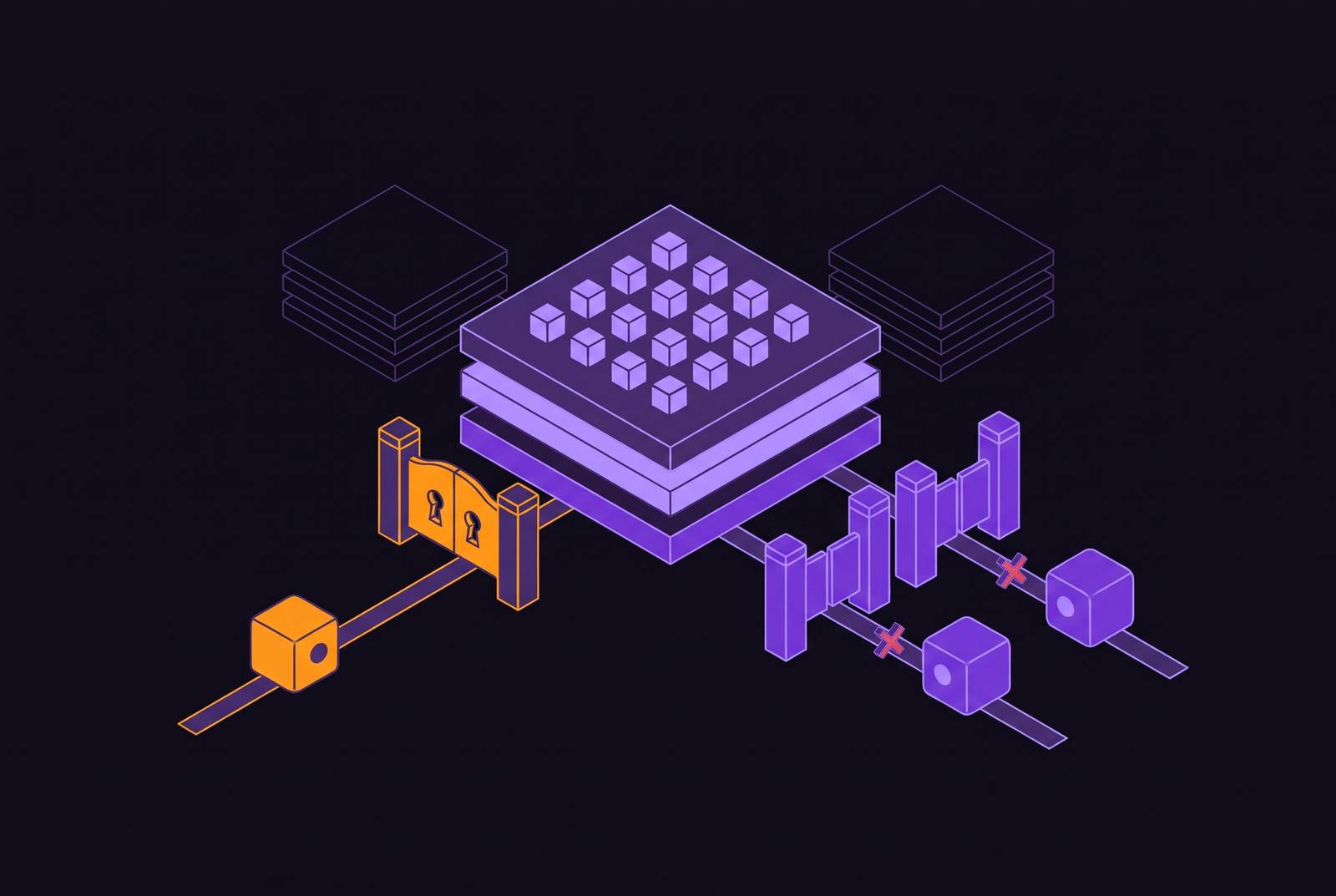
An MCP gateway sits between agents and MCP servers as a reverse proxy. It authenticates, authorizes, routes, rate-limits, and logs requests before the backend receives them. The traffic pattern is Agent → Gateway → Server A / Server B. A policy applied after a query cannot prevent the access that has already occurred.
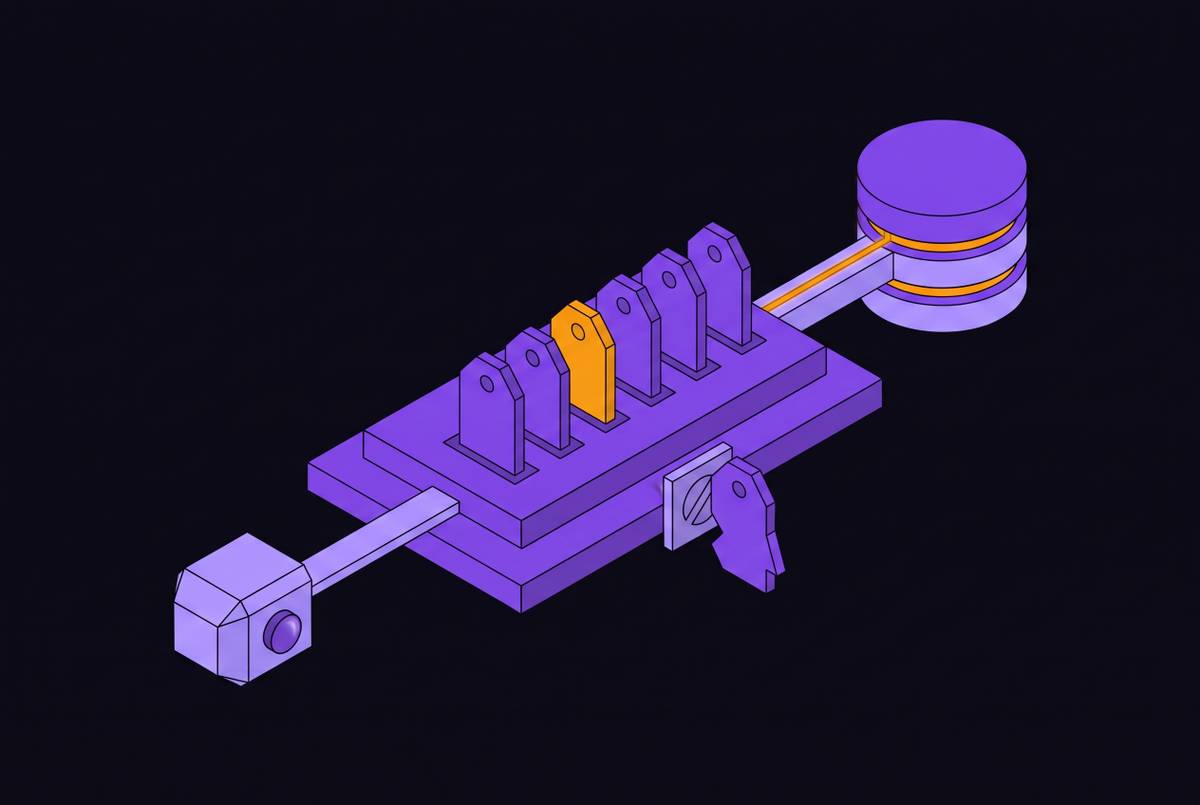
Within that architecture, tool-level access-control lists constrain the reach of each agent identity. A server may expose many tools, but an agent sees only the subset explicitly granted to it. Default deny is the governing rule. Server-level access alone is too coarse when permission to use one tool would otherwise expose unrelated capabilities.
The 2026-07-28 specification strengthens the authorization foundation through OAuth built on Protected Resource Metadata, RFC 9728, and Resource Indicators, RFC 8707. Client ID Metadata Documents take the place of Dynamic Client Registration as the recommended way to register clients. Endpoints can be wrapped in OAuth or JWT middleware, with agent contexts sandboxed against confused-deputy and prompt-injection escalation. A backend still needs explicit rules about which identities may invoke which tools and under what scope.
The specific access-control properties that separate safe backends from connected-but-unsafe ones
Least privilege begins with a dedicated integration identity and read-only tools scoped to the objects, fields, and records the agent needs. It does not begin with a broadly privileged credential and an instruction to behave carefully. The identity itself must constrain the agent. For analytics, a service-role key that bypasses security policies breaks that boundary even when the agent’s task is just to read usage data.
Data minimization narrows the exposed surface further by withholding the full production schema and serving a pre-modeled, governed dataset. Least privilege establishes permission, while minimization limits what is available to consume. The distinction is important for an analytics backend. An agent that only needs approved metrics does not need general-purpose access to the database from which those metrics were calculated. The safe pattern places scoped, audited tools over that governed dataset.
General Analysis demonstrated the risk in its published report, “Supabase MCP can leak your entire SQL database”. A coding assistant operating a Supabase database with a service role key that bypasses Row Level Security could be induced by customer-submitted message content to execute unintended SQL.
Mutation controls and traceability complete the test. Deletes, permission changes, and bulk updates require explicit approval, and the agent cannot authorize its own escalation. Every request must retain the agent identity, tool invoked, payload, result, and any approval record in an audit trail that can feed a SIEM. Prevention and accountability serve different purposes. Neither an approval mechanism nor a detailed log compensates for excessive read access.
How Supabase's own MCP server models these controls — and where a known gap remains
Supabase’s MCP integration provides a concrete example of useful platform controls. The project_ref parameter restricts the server to a single project, establishing a meaningful least-privilege boundary. Supabase’s official guidance also states that the service role key bypasses all Row Level Security policies and provides unrestricted database access. That distinction limits its appropriate use. A credential suitable for schema migrations is not suitable for agent sessions that touch user data.
The integration also makes operational visibility available through MCP. The query_logs tool provides structured access to logs across API, Auth, Storage, Edge Functions, Postgres, and Realtime. With prepared agent prompts, agents can run health, security, performance, and resource checks on a schedule. These are useful operational capabilities. Visibility into a project does not establish that every credential used to reach it has the correct scope.
A known gap remains in the browser OAuth flow, which requests full account access regardless of the enabled tool groups. Even when only database tools are needed, the token covers edge functions, storage, branching, and other account capabilities. Tool selection and credential scope therefore diverge. Scoped Personal Access Tokens, generally available since September 2026, can be substituted in CI or non-browser flows to narrow that exposure.
Supabase has acknowledged the broader all-or-nothing OAuth permission-scoping problem and is working on fine-grained permissions. The specific tool-group scope gap, however, has not received an official response. This is a limitation of the platform’s controls. For teams building on Supabase, this shows why limiting the project and choosing the tools are not enough to govern analytics. A governed data layer above the MCP server must guard against the access that remains, since the token may allow more than the visible tools do.
What enterprise-grade MCP gateway governance looks like in a multi-agent deployment
When agents share a data layer, governance must keep their identities and permissions separate. Per-agent credentials and attributable audit trails become essential because a common endpoint does not imply common authority. Each agent needs its own enforced boundary. Without that distinction, a deployment cannot reliably connect an action to the authority under which it occurred.
Mintive provides the named example of this enterprise governance pattern. Virtual MCPs bundle approved connectors and curated tools behind endpoints specific to a team, role, use case, or agent. The endpoint exposes an explicitly chosen tool surface. SCIM-driven group provisioning keeps access aligned with identity-directory changes, while RBAC and SSO apply consistently. This puts authorization in the deployment’s identity system instead of leaving each application to make its own access decisions.
Runtime governance adds declarative rules and gateway middleware running in a sandboxed environment. Audit trails export to SIEM systems for centralized compliance workflows, preserving accountability beyond an individual agent session. The broader gateway category includes TrueFoundry, Obot, and Workato. The relevant benchmark is not the presence of another infrastructure product, but controls that an agent cannot exceed. Those controls must be enforced at the platform layer rather than depend on each consuming application to reproduce them correctly.
Why a governed semantic layer, not just a gateway, is what headless analytics specifically requires
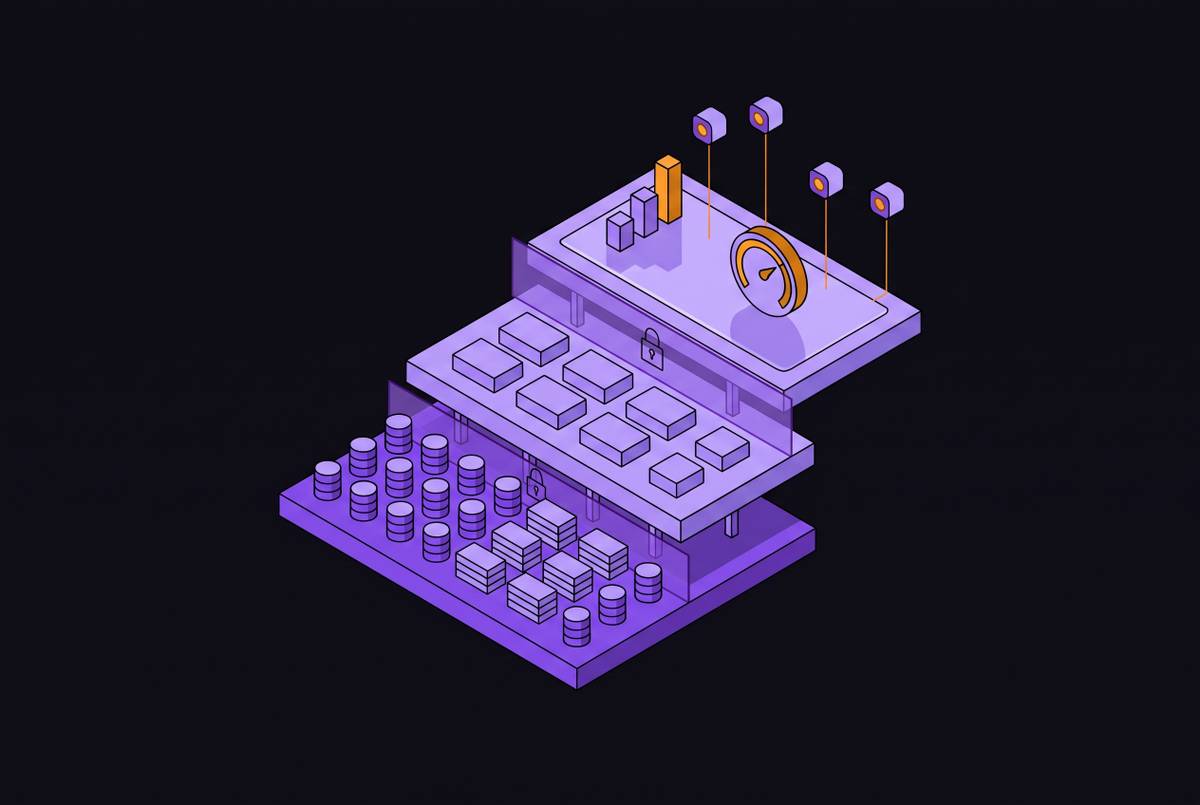
A gateway determines which tools an agent may call, but it does not by itself determine what an analytics result means. Headless analytics needs a semantic layer beneath that access boundary. The semantic layer separates metric definitions from presentation and sits between the data store and consuming tools. Metrics are defined once for human queries and agent queries, no matter which frontend uses them.
Without that shared definition, “monthly active users” can mean different things in a product dashboard, an investor report, and a growth team’s spreadsheet. An agent querying that fragmented stack can produce faster, more confident mistakes. A gateway may authorize every request correctly while the results still disagree.
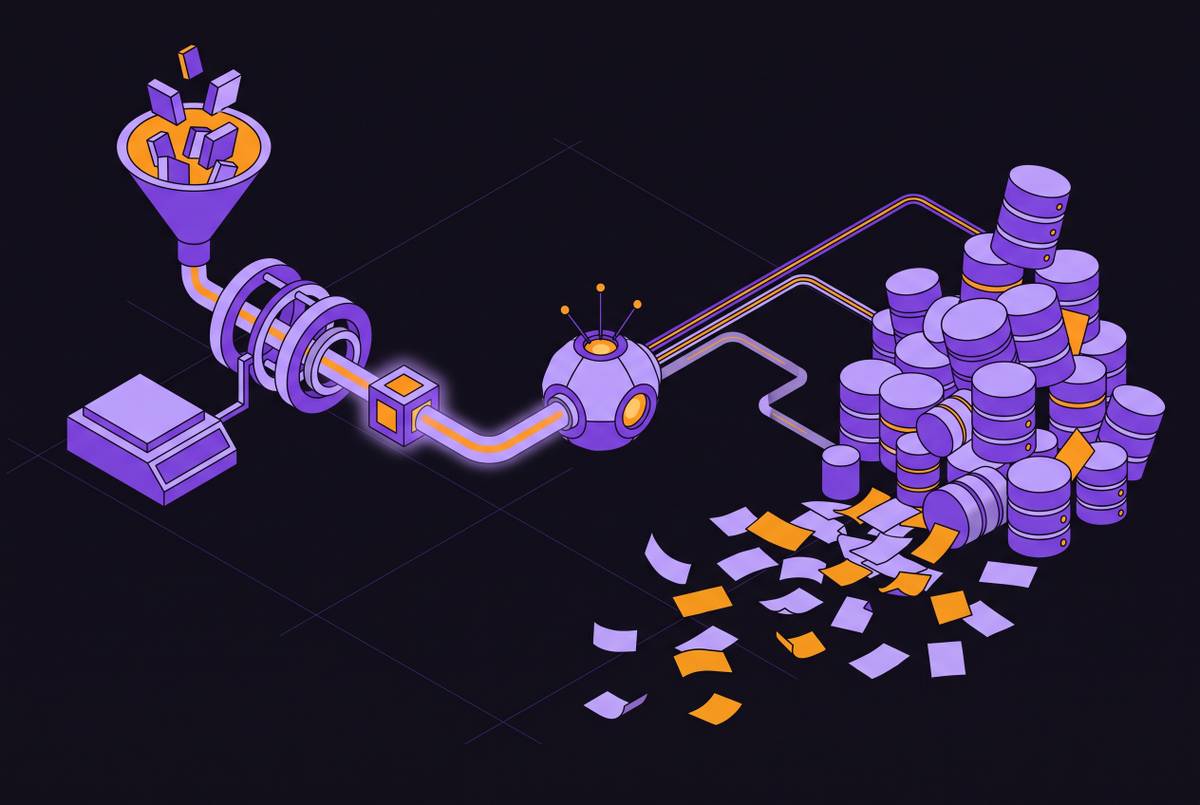
Pre-calculated, pre-modeled datasets provide the appropriate surface for agentic analytics. An agent can consume a governed Parquet dataset queryable through DuckDB rather than generate ad-hoc SQL against the production database. The dataset bounds the available analytical scope. This approach supports fast, inexpensive queries while preventing the agent from reaching beyond the data it is authorized to consume. The protection comes from the exposed data boundary.
A governed data layer absorbs query load, removes the direct production blast-radius risk, and supplies a stable, versioned surface for reasoning. It also prevents definition drift across consumers. Updating a metric calculation once in the semantic layer propagates the change to dashboards, agent contexts, and reports. That is the foundation for adding usage analytics to an AI agent without making a prebuilt dashboard UI the source of analytical truth.
How should teams evaluate an MCP-exposed analytics backend for API-first and agent-first use?
Teams should start by checking what each agent identity is allowed to do. A suitable backend enforces least privilege through default-deny access scoped to individual tools. Credential scope must match the tools the agent is allowed to use. The Supabase OAuth gap is the reference case for why those are separate tests. A token with full account authority does not become narrowly scoped merely because fewer tools are enabled.
The next criterion is structural separation from production data. A gateway policy alone is not equivalent to a governed layer of pre-modeled data that prevents agents from querying the production database. Metric definitions need the same scrutiny. If “MRR” can mean different things through different query paths, the backend remains ungoverned analytically even when its gateway permissions are correct. API control is valuable only when those APIs serve a consistent analytical contract.
Accountability requires an attributable, exportable record of each interaction, including the agent identity, tool, payload, result, and approval record. Read and write surfaces also need to be separate. Analytics agents should be structurally unable to trigger mutations, rather than share a general-purpose tool surface whose safety depends on their behavior. Where tools can make mutations, explicit approval is still needed.
For a Supabase-based team, these criteria distinguish database administration capabilities from a safe analytics consumption layer. For a multi-agent deployment, they distinguish shared connectivity from independently enforced authority. For a team that wants no opinionated frontend, they establish where consistent metrics must live instead. The backend must enforce the data scope, metric definition, and action boundary even when the agent makes the wrong request.