Governing Event Schemas so Any API Consumer Queries the Same Ground Truth
Schema registries lock structure, but only semantic layers align meaning.
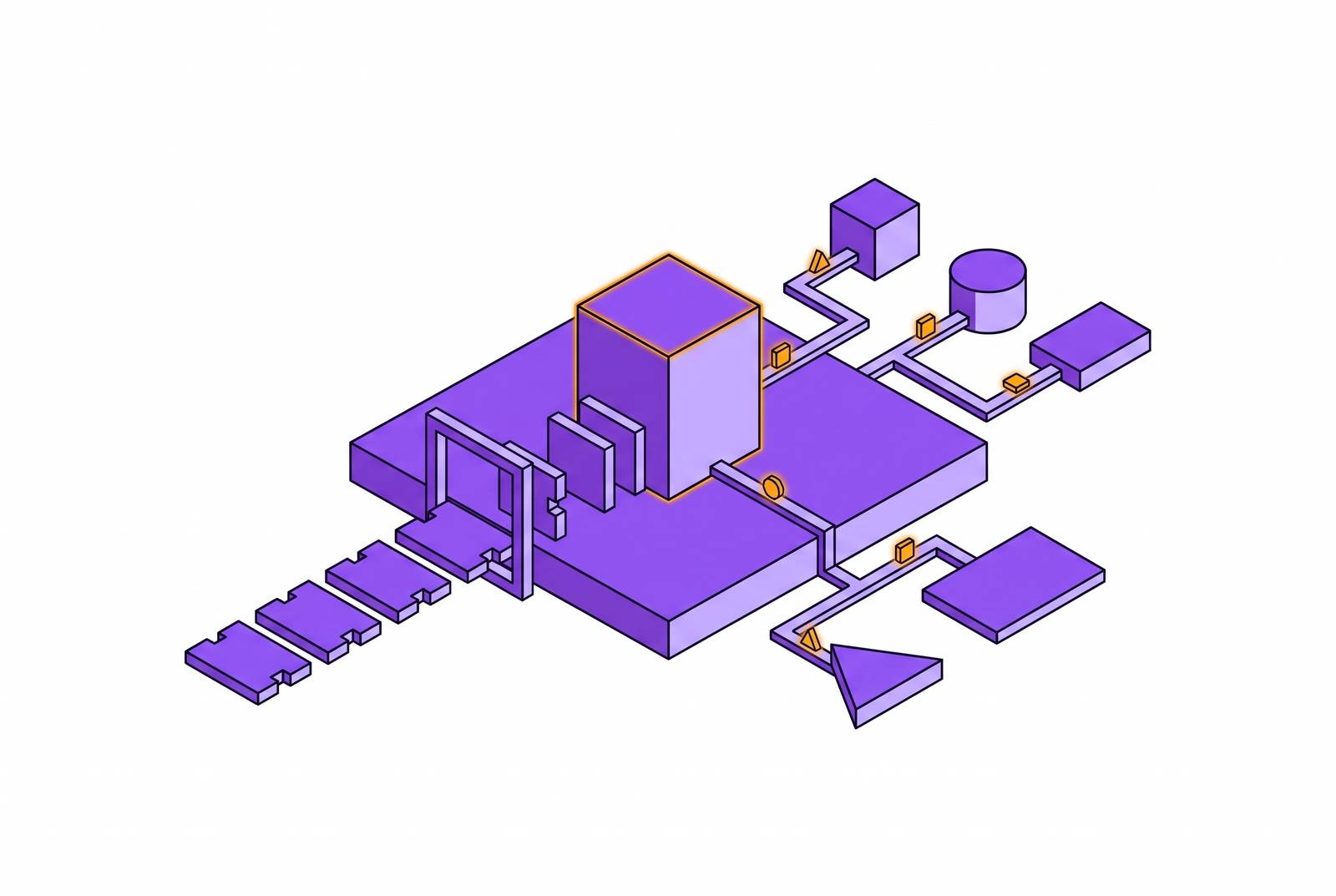
A headless analytics platform for API-first and agent-first teams needs a governed metric backend. Full API control is useful only when dashboards, applications, and agents receive the same versioned definitions and calculated results. Governing event schemas establishes that contract through enforced compatibility rules and pre-modeled semantics, so consumers query shared ground truth.
Why event schemas are contracts, not just data formats
An Order Service renames customerId to accountId. The code compiles, tests pass, and deployment succeeds, but the Billing Service fails at runtime because it depends on the old field. Publishing an OrderCreated event therefore creates a public contract, whether or not the producing team documents it as one. A unilateral change can break consumers that the producer does not see.
The dependency exists before anyone formally records it. The same problem appears when “monthly active users” means something different in the product dashboard, the investor report, and the growth team’s spreadsheet. A conflicting definition can pass without an error, while a missing field can trigger one. Each output can look credible while the numbers diverge and trust erodes.
How schema drift compounds silently across consumers
When ownership is decoupled, drift comes from the structure itself. Without a central authority, consumers reconstruct business reality independently. Field-level drift begins with changes such as renaming user_id to userId without a contract, validation, or changelog. Orphaned events introduce a different ambiguity when features are retired but their events remain in the codebase. New consumers may rely on those stale definitions because nothing distinguishes them from current ones.
Siloed ownership makes those ambiguities accumulate across teams. When nobody owns the event taxonomy, each team chooses between custom and standard events on its own, and teams sometimes use different names for the same user action. Those choices then shape the definitions each team uses in its analytics. Sales, finance, and product can each maintain a version of ARR that appears sound within its own context. The disagreement becomes visible only when the executive team compares outputs, shifting attention from decisions to disputes about the numbers.
What a schema registry actually enforces and what it leaves to you
A schema registry stores versioned schemas and checks proposed changes against compatibility rules. It lets publishers know about problems before consumers get incompatible data. A removed field or changed type can be rejected when it violates the selected rules. Broker-side validation enforces those rules at runtime by checking whether incoming payloads have the expected structure. PostNL’s approach combines these checks, allowing invalid messages to be rejected, quarantined, or routed to a dead-letter queue.
Backward compatibility lets newer consumers read older data, with defaults for new fields so historical records remain readable. Forward compatibility lets older consumers read newer data while gracefully ignoring unknown fields. Full compatibility combines both directions, allowing independent producer and consumer updates within those constraints. Solace recommends full compatibility for systems that have to meet strict governance requirements.
Solace Schema Registry supports Avro and JSON Schema, with Protobuf support coming soon. It provides centralized versioning and compatibility checks. When deployed within an event mesh of interconnected brokers, it also replicates automatically across regions. These controls govern structure. They cannot establish whether events occurred in the right sequence, what a field’s value means, or whether a metric definition is correct.
Three approaches to catching breaking changes before production, and what each one misses
Consumer-driven contract testing works for teams that can agree on what consumers expect. Pact lets consumers put those expectations into tests that produce a contract file, which the producer must pass before merging changes. This catches problems early while preserving flexibility for changes that do not affect current consumers. Coverage remains the limiting factor for this approach. Missing tests leave gaps, and a new consumer replaying historical events may encounter schemas that no current contract covers. Yan Cui says a previous employer adopted Pact after several high-profile outages finally won support for it in the organization.
Shared schema packages are an easier way to start. LEGO’s approach publishes schemas as versioned packages, such as NPM packages, against which consumers write tests. It requires neither a Pact broker nor organization-wide adoption. However, publishers do not necessarily know about those tests or have an obligation to run them before committing changes. Consumers can discover incompatibility only after it has been introduced, and cross-language teams find shared packages awkward.
A registry with broker-side validation closes the structural enforcement gap. PostNL’s approach checks both schema changes at publish time and actual payloads at runtime, rather than relying solely on participating teams’ tests. That protection has an operational cost. Running and scaling the registry and broker adds overhead, schema lookups add latency, and compatibility rules can be unnecessarily restrictive when no consumers yet exist. Contract tests and shared packages can still help within these limits, but complete structural protection still needs centralized enforcement.
Structural enforcement alone does not produce a semantic single source of truth
A structurally valid event can support several incompatible calculations of retention or ARR. The schema may be identical in every case. Sales, finance, and the investor report can still apply different business logic to the same fields, producing different answers without violating any compatibility rule. Schema governance and semantic governance therefore solve separate problems. Conflating them leaves analytical definitions outside the contract even when event delivery is tightly controlled.
Metrics-as-code extends governance to those definitions. Business metrics are defined once in a machine-readable, version-controlled format and served through a governed API. Consumers receive the calculated result. The Philadelphia Inquirer adopted the dbt Semantic Layer around 2024 to speed trusted self-serve access, using metrics-as-code and version-controlled definitions that keep changes auditable. This applies versioning discipline to business logic.
Polar Analytics illustrates the same principle across multiple data sources. Its semantic layer unifies 45+ native integrations, including Shopify, Meta, Google, TikTok, Klaviyo, Recharge, Stripe, and Amazon. Every metric definition is API-accessible. Dashboards, custom applications, and AI agents can therefore query the same source of truth. For a headless analytics backend, that shared definition is the decisive capability, rather than the presence or absence of a dashboard interface.
Why AI agents break the assumption that consumers are human and careful
Human analysts can stop when a number looks wrong. An agent cannot be assumed to apply that judgment before acting on a result. Without a governed metric backend, it may invent SQL logic against raw tables and return an answer that is structurally valid but semantically incorrect. The risk extends beyond its initial prompt because continuous interaction with live sources shapes its behavior. Ungoverned access makes those interactions unaudited, uncontrolled, and unrepeatable.
Agents require lifecycle controls, provenance, and enforcement of the chain identifying on whose behalf they act. Forrester’s AEGIS framing calls for unified sensitive-data definitions and purpose-bounded access. Salesforce announced Headless 360 at TrailblazerDX on April 15, 2026, with more than 60 new MCP tools, and reported millions of MCP calls processed since launch by late May 2026. At that scale, definitions that disagree become a problem for production engineering as well as for individual analytical answers.
Safe agent-to-data access requires a layered architecture, not just an access token
Teams should list every data source the agent will touch, then set row- and column-level access policies before connecting it. Next, they should expose data through a governed protocol layer. Every query must then be audited. The sequence is deliberate because connection design must follow policy, rather than becoming the point at which policy is improvised.
MCP transports governed capabilities but does not create governance. The semantic layer, access controls, and the tenant model are still needed alongside it. A governed MCP interface gives agents using different LLMs one access-controlled route to data, centralizing enforcement, logging, and permissions instead of creating a separate connector for each agent. Analytical queries should pass through a centralized API gateway that enforces permissions, logs access, and directs database traffic exclusively to isolated read replicas. Agents must not query production databases, whose query patterns are not designed for analytical workloads.
ZoomInfo’s GTM.AI became generally available on June 1, 2026, as a headless context layer exposing its graph through MCP, governed before agent access. The broader architectural unit, including for agent usage analytics, is a pre-modeled, pre-calculated dataset. A governed backend can supply results through an API without requiring a prebuilt dashboard UI. Pre-modeled datasets make answers cheaper to produce, faster to return, and consistent with the results human consumers receive.
How can Supabase teams apply schema and semantic governance from day one?
For teams using Postgres as their primary system of record, analytical governance extends existing database discipline rather than requiring a separate data warehouse or ETL pipeline. Good schema design, targeted indexes, query analysis, and connection management take precedence over adding compute. A Postgres connection is an OS process, and the available pool is limited. Running dashboard or agent analytics against production under load can slow queries and use up all the available connections.
Materialized views provide complex aggregations computed once and reused across requests. One project reduced dashboard load time by an order of magnitude after replacing live queries with materialized views. For agents, the corresponding path is to pre-model metrics into governed Parquet datasets queryable through DuckDB. A single MCP server can expose those datasets, metric definitions, and scheduled reports with consistent permissions and auditability. Production row-level security does not carry over on its own when data is copied, so datasets need their own access rules.
Observability makes this discipline sustainable as schemas change. Teams should install pg_stat_statements, enabled by default on most managed Postgres, and auto_explain for slow-query plan logging from day one. The former records query call counts, total and mean execution time, rows, and buffer I/O, giving teams evidence about analytical demand. Without visibility into slow queries, frequently accessed schemas, and connection pressure, changes are made blind. Pre-modeled datasets and governed APIs then extend the event contract into analytics, with definitions and permissions enforced centrally for each consumer.
Governing the right metrics first, before the schema grows
A technically sound governed layer can still go unused. When teams govern too many metrics, or the wrong ones, the architecture loses its link to the decisions they need to make. Before building dashboards or defining schemas, teams should agree on what “active user” means, how retention is calculated, and which events represent which business actions. These decisions supply the semantic layer’s raw material. Deferring them recreates drift at the level of meaning, even when field names and types remain stable.
For most B2B SaaS startups, the canonical starting set is CAC, LTV, monthly churn, ARR, and gross margin. Companies at an earlier stage have more need for activation, retention, and learning signals than for financial metrics. Teams that are pre-product-market-fit should govern only three to five metrics. A smaller set supports precision and use by allowing definitions to be agreed upon and used in decisions, independently of dashboard cost.
Those definitions also need a controlled path for change. A standard event envelope separates metadata from domain data in the payload and includes a schema version field. That pattern provides a versioning scaffold for metric definitions. When “active user” changes, the definition should receive a version bump, a changelog entry, and a migration path, just as a schema change would. Human analysts and agents then query the same ground truth not simply because they access the same data, but because the contract defining it is shared.